

Customer service
+49 6298 3753 100

Veröffentlicht am
Lifesavers with fur noses
hestomed visits the Johanniter Unfallhilfe 100% volunteer rescue dog squadron.
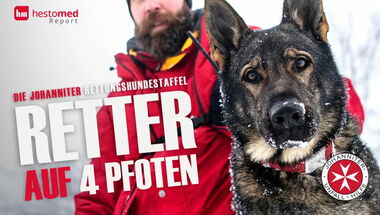
100 % voluntary work. 18 rescue dogs. From Australian Shepherds to Belgian Malinois. Crisis areas. Rubble & area. 50,000 square metres of deployment area per dog. Ready for action 24/7. Since its foundation in 2015, the Johanniter rescue dog team in Aachen, Düren and Heinsberg has developed into an exemplary unit in the rescue service landscape. And was recently named Johanniter Federal Winner 2023. The 18 rescue dogs and their handlers are an indispensable resource in the toughest and most complex emergency situations. The Johanniter rescue dog squadron, which is funded by donations, is on hand around the clock wherever people are in need and the well-trained four-legged support is indispensable. Just as hestomed is always on hand when lifesavers need the most reliable and best medical technology.
Volunteer rescue workers sacrifice up to 400-700 hours per year for the training and deployment of their four-legged partners. The rescue dogs, all privately owned by their handlers, are carefully and lovingly prepared for their demanding task. Sense of detection, skilfully used play instinct, rehearsed scenarios in a realistic operational environment: through intensive training, which includes targeted search and rescue exercises, the animals develop outstanding skills to track down missing persons and act effectively in emergency situations.
The main component of the success of the Johanniter rescue dog team is the seamless cooperation between the teams and other rescue services and organisations.
"The dog is the only creature that has never asked me for a favour", said French President Francois Mitterand about his Labrador "Baltique". In the Johanniter Unfallhilfe rescue dog teams, too, the optimal interaction between humans and animals is not achieved through coercion or orders, but through the motivation of the natural human friendliness and unconditional loyalty of our four-legged companions.
Researchers believe that humans began taming wolves around 15,000 to 30,000 years ago and using them as hunting companions and guard dogs. Over time, various dog breeds with different abilities and characteristics developed. Protecting and supporting humans, and even saving their lives in an emergency, has been in the dog's blood for thousands of years.